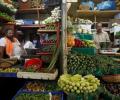
While rising food inflation is a matter of grave concern for a significant chunk of the population and for policy makers as well, it marks a turnaround in the fortunes of the farmer, reports Sanjeeb Mukherjee.
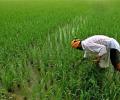
A pick-up in farmer income could have a cascading impact on the rural economy, though agriculture is becoming a smaller part of India's overall rural incomes.

Starting today, Modi and top officials in the Prime Minister's Office will be briefed by various central ministries and departments on their plans as well as agenda for the next five years. They will also apprise the PMO of the work they have done so far in realising the agenda of government's second term in office.

In 2009, the UPA government, had announced a slew of measures to boost liquidity in NBFCs. These included a scheme for providing liquidity support to NBFCs having assets size of over Rs 100 crore through a SPV.
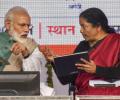
In the 2020-21 Budget, the prime minister and the finance minister are keen to stamp their narrative, after various rollbacks following the previous Budget, said top government sources. Besides the scheduled meetings, the sources said, the Prime Minister's Office is expected to hold several meetings with top secretaries and officials on various ongoing schemes, their performance and also how some of them could be tweaked for better results.
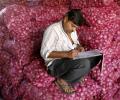
India exported $102 million worth of dehydrated onions in 2018-19.

Though the NITI Aayog did not give its estimates for the required GDP growth at constant prices, economists pegged it at 9 per cent, a feat not seen since the GDP series was revised with 2011-12 as the base year.

A WGC survey says that there is no dearth of gold demand, but there is lack of trust among prospective gold buyers, not only in India but globally.
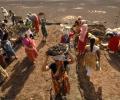
Sources said the rural development ministry has sought an additional Rs 20,000 crore for MGNREGA for 2019-20 over and above the budgeted Rs 60,000 crore for 2019-20. Though, all of the PM-KISAN savings may not be transferred to fund MNGREGA's extra needs, sources said a part of this could be transferred.
With 3,000 tonnes of imported onion entering the market over the next fortnight, the price should start cooling off. Soon after, the new crop of onions will arrive, further reducing prices.

The worsening demand for jewellery has already started impacting jobs and karigars or goldsmiths.
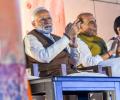
Dissatisfaction with the state leadership, along with caste and sectarian factors and economic issues -- particularly those relating to jobs and rural distress cost the BJP.

Although demonetisation and improper implementation of GST along with falling prices are being blamed for much of the distress in rural India for some time, experts believe those may not be the only reason.
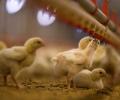
A data shows the number of backyard poultry has risen by 46 per cent between 2012 and 2019. The development is extremely positive because it provides an incentive for small and marginal farmers to rear birds.

As the number of cross-bred female cattle rise, the entire concept of lean and flush seasons for milk will go away, as these animals give similar quantities in all seasons.

The industry alleges the government has been apathetic, despite their pleas for quick action. However, H2 may be different as The US-China trade war had opened a window for Indian exporters to ship more to America.

As gold prices turn prohibitive, traders fear a drop of as much as 50% in sales over the previous season.
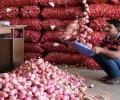
Because of the reluctance to intervene structurally in the political economy of onion trade, the BJP is paying the price till today and might continue to do so in the forthcoming election to the Delhi assembly.

The BJP's effort comes in the wake of Commerce and Industry Minister Piyush Goyal set to attend the eighth RCEP ministerial meeting in Bangkok from October 10 to 12.

The intention of the government is to cap prices of drugs that are essential and which the public widely uses.
 © 2026 Rediff.com - Advertise with us - Disclaimer - Privacy Policy - Sitemap - Feedback - About us - Terms of use - Grievances